



Epigenetic Reader Domain
Epigenetic regulators of gene expression and chromatin state include so-called writers, erasers, and readers of chromatin modifications.Well-characterized examples of reader domains include bromodomains typically binding acetyllysine and chromatin organization modifier (chromo), malignant brain tumor (MBT), plant homeodomain (PHD), and Tudor domains generally associating with methyllysine. Research on epigenetic readers has been tremendously influenced by the discovery of selective inhibitors targeting the bromodomain and extraterminal motif (BET) family of acetyl-lysine readers. The human genome encodes 46 proteins containing 61 bromodomains clustered into eight families. Distinct experimental approaches are used to identify the first BET inhibitors, GSK 525762A and (+)-JQ-1.
The Polycomb group (PcG) protein, enhancer of zeste homologue 2 (EZH2), has an essential role in promoting histone H3 lysine 27 trimethylation (H3K27me3) and epigenetic gene silencing. This function of EZH2 is important for cell proliferation and inhibition of cell differentiation, and is implicated in cancer progression. Cyclin-dependent kinases regulate epigenetic gene silencing through phosphorylation of EZH2. In many types of cancers including lymphomas and leukemia, EZH2 is postulated to exert its oncogenic effects via aberrant histone and DNA methylation, causing silencing of tumor suppressor genes.
p300/CBP is not only a transcriptional adaptor but also a histone acetyltransferase.
Epigenetic Reader Domain Isoform Specific Products
-
Epigenetic Reader Domain
(434)
View all products
-
Brd
(3)
View all products
-
BRPF1
(9)
View all products
-
BRPF2
(5)
View all products
-
BRPF3
(2)
View all products
-
BRD2
(66)
View all products
-
BRD3
(62)
View all products
-
BRD4
(298)
View all products
-
BRDT
(26)
View all products
-
CECR2
(4)
View all products
-
BD1
(9)
View all products
-
BD2
(9)
View all products
-
BRD7
(9)
View all products
-
BRD9
(55)
View all products
-
BET
(22)
View all products
-
BAZ
(1)
View all products
All Product Categories
-
Epigenetic Reader Domain Inhibitors
(583)
View all products
-
Epigenetic Reader Domain Agonists
(3)
View all products
-
Epigenetic Reader Domain Antagonists
(2)
View all products
-
Epigenetic Reader Domain Activators
(11)
View all products
-
Epigenetic Reader Domain Modulators
(3)
View all products
-
Epigenetic Reader Domain Chemicals
(2)
View all products
-
Epigenetic Reader Domain Inducer
(1)
View all products
-
Epigenetic Reader Domain Degraders
(165)
View all products
-
Epigenetic Reader Domain Controls
(12)
View all products
-
Epigenetic Reader Domain Substrate
(1)
View all products
-
Epigenetic Reader Domain Ligands
(28)
View all products
-
Epigenetic Reader Domain Related Products (888)
Related Products (888)

-
Antibodies (109)
-
Epigenetic Reader Domain Isoform Comparison
-
Zefamenib
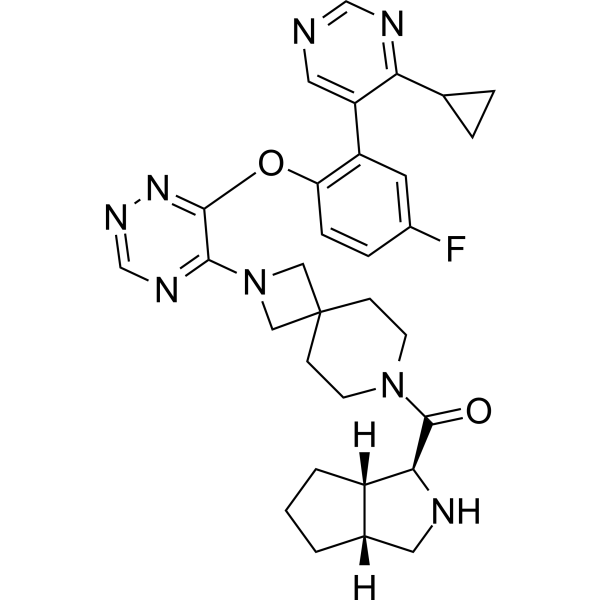 0 ImagesSynonyms: BN-104; BNM-1192; Menin-MLL inhibitor 27Zefamenib (BN-104) is an effective selective brain membrane protein inhibitor with oral activity, and it's also a Menin inhibitor, it can block the Menin-MLL interaction and leads to the degradation of Menin protein. Zefamenib is a weak hERG inhibitor, with an IC50 greater than 100 μM. Zefamenib has anti-tumor activity and can be used in cancer research, such as for acute myeloid leukemia.
-
ATF4-IN-2
 0 ImagesATF4-IN-2 (Compound 29) is a ATF4 inhibitor with a IC50 value of 47.71 nM. ATF4-IN-2 can be used in the study of neurodegenerative diseases.
-
IACS-9571 hydrochloride
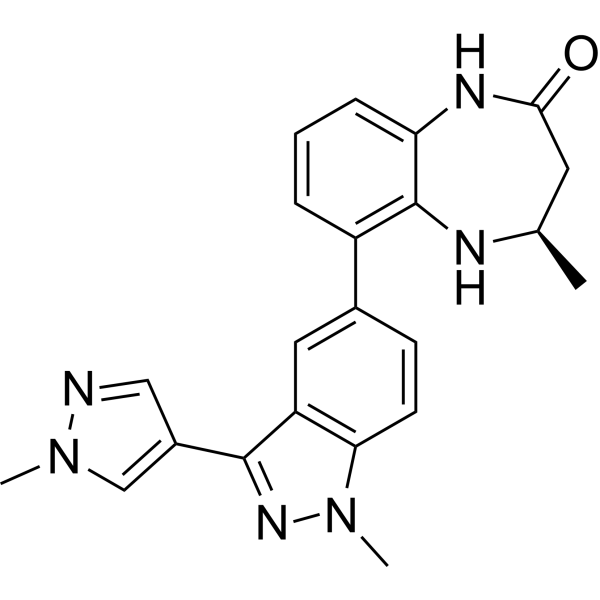
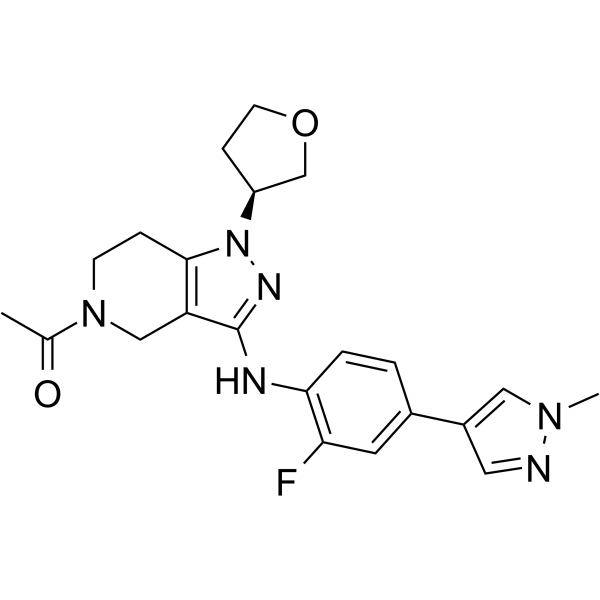
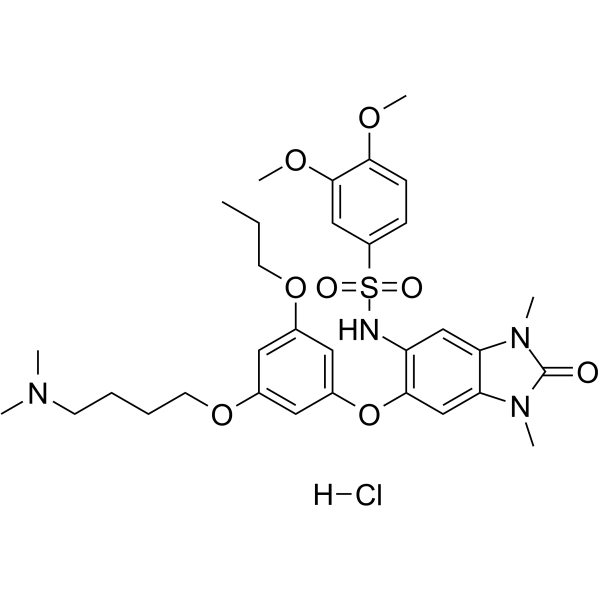 0 ImagesSynonyms: ASIS-P040 hydrochloride
-
VZ185
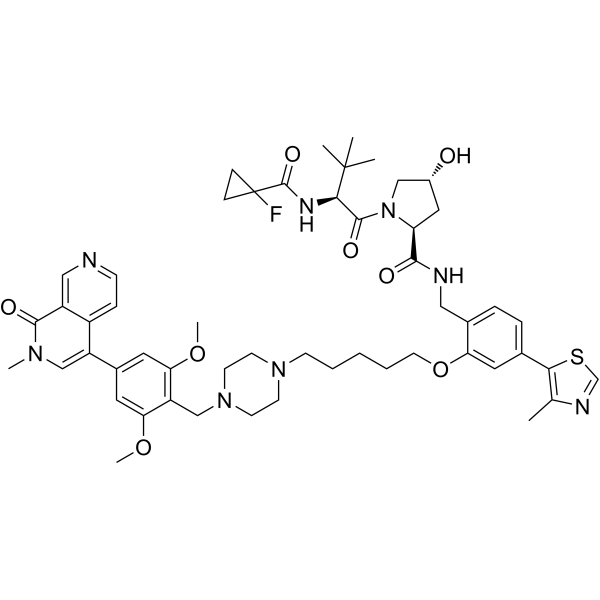 0 ImagesVZ185 is a BRD9 and BRD7 PROTAC degrader, with DC50 values of 1.76 nM and 4.5 nM, respectively, in RI-1 cells; and DC50 values of 4 nM and 34 nM, respectively, in HEK293 cells. VZ185 hijacks the CRL2VHL E3 ubiquitin ligase complex to induce ubiquitination and subsequent proteasomal degradation of BRD9 and BRD7. VZ185 can be used in research related to acute myeloid eosinophilic leukemia and malignant rhabdoid tumors.
-
N6-Cyclohexyladenosine
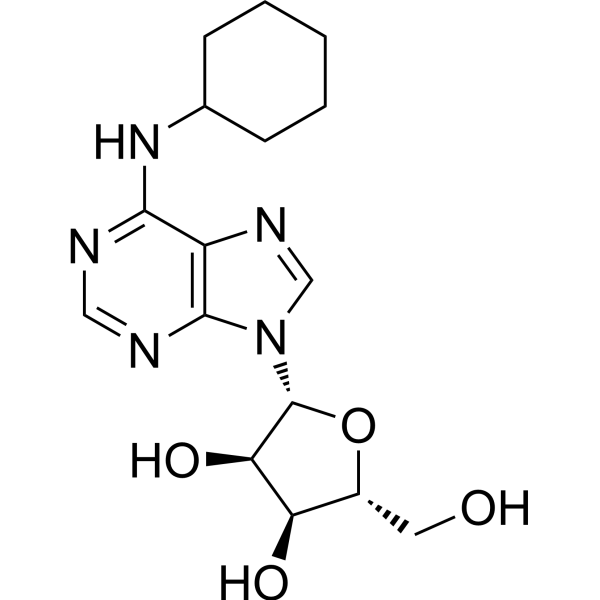 0 ImagesSynonyms: CHAN6-Cyclohexyladenosine is a selective adenosine A1 receptor agonist (EC50 = 8.2 nM). N6-Cyclohexyladenosine enhances the activation of the PI3K/Akt/CREB/BDNF axis. N6-Cyclohexyladenosine promotes remyelination, induces sleep, and improves 3-NP-induced Huntington's disease. N6-Cyclohexyladenosine can be used in liver cancer research.
-
AR/BRD4 RIPTAC-1
 0 ImagesAR/BRD4 RIPTAC-1 (Compound II-5) is an orally active Regulatory-inducible proximity-targeting chimera (RIPTAC). AR/BRD4 RIPTAC-1 induces the formation of a stable ternary complex between the androgen receptor (AR) and BRD4, thereby blocking BRD4 function. AR/BRD4 RIPTAC-1 inhibits the growth and proliferation of tumor cells. AR/BRD4 RIPTAC-1 holds promise for use in prostate cancer research.
-
A1874
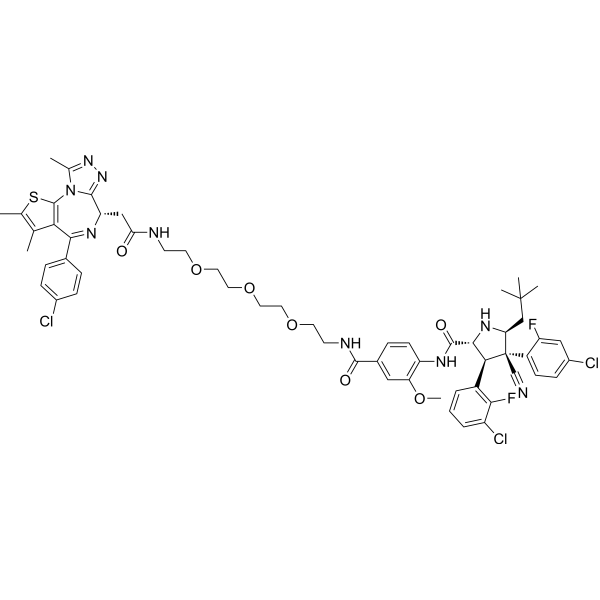 0 ImagesA1874 is an orally active BRD4 PROTAC degrader with a DC50 of 32 nM. A1874 degrades BRD4 via the ubiquitin-proteasome system by recruiting the MDM2 E3 ligase, while disrupting the MDM2-p53 interaction to stabilize p53 and upregulate p21, thereby inducing cell cycle arrest and apoptosis. A1874 exhibits selectivity for wild-type p53 cells and MDM2-amplified tumors, and it can be used in research on breast cancer, colorectal cancer, melanoma, lung cancer, lymphoma, myeloid leukemia, osteosarcoma, and glioblastoma.
-
NEO2734
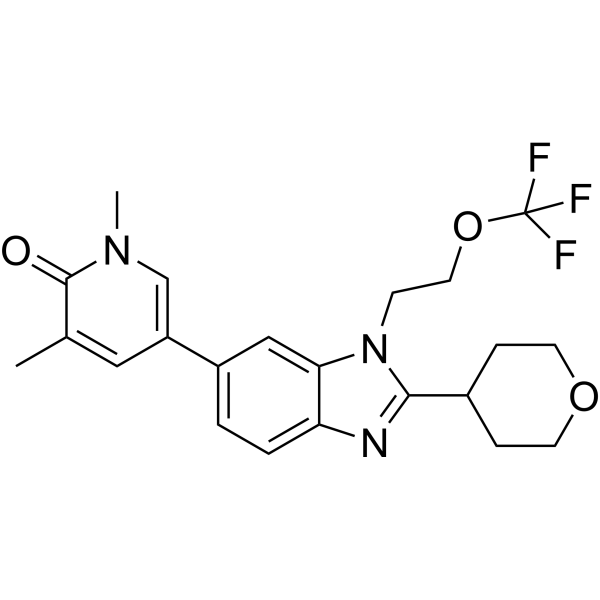 0 ImagesSynonyms: EP31670NEO2734 (EP31670) is an orally active dual p300/CBP and BET bromodomain selective inhibitor, with IC50 values of <30 nM for both p300/CBP and BET bromodomains. NEO2734 is active in SPOP mutant and wild-type prostate cancer.
-
Enzomenib
 0 ImagesSynonyms: DSP-5336Enzomenib (DSP-5336) is an orally active Menin inhibitor (IC50=1.4 nM, Kd=6.0 nM). Enzomenib disrupts the interaction between Menin and KMT2A/MLL fusion proteins, specifically inhibits the expression of leukemia driver genes such as HOX/MEIS1, and upregulates ITGAM. Enzomenib effectively induces cell differentiation, inhibits tumor cell proliferation, and suppresses primitive cell colony formation. Enzomenib reduces disease burden and prolongs survival, but causes adverse reactions including differentiation syndrome and QTc interval prolongation. Enzomenib is used for research on relapsed/refractory acute myeloid leukemia, acute lymphoblastic leukemia, and other hematologic malignancies with mixed lineage leukemia (MLL) rearrangements or NPM1 mutations.
-
FKBP12 PROTAC dTAG-7
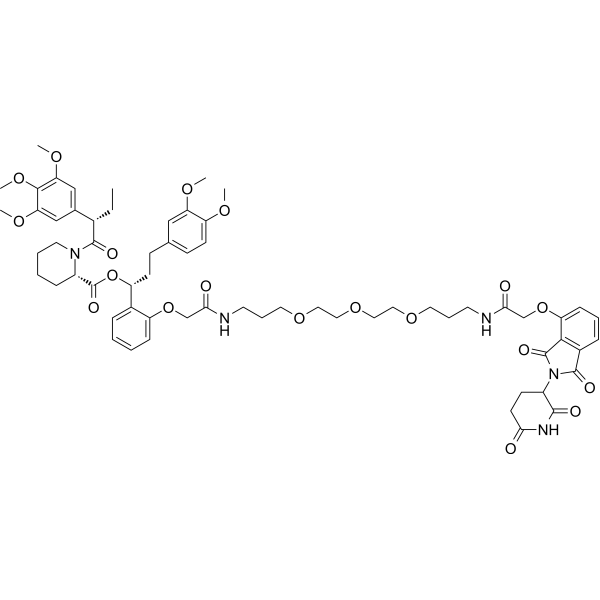 0 ImagesSynonyms: dTAG-7FKBP12 PROTAC dTAG-7 (dTAG-7) is a FKBP12F36V PROTAC degrader. FKBP12 PROTAC dTAG-7 binds FKBP12F36V and CRBN to form a complex, mediating degradation via the ubiquitin-proteasome system. FKBP12 PROTAC dTAG-7 mediates the degradation of FKBP12F36V-tagged nuclear and cytoplasmic proteins, including BRD4, HDAC1, EZH2, MYC, PLK1, KRASG12V, and antigen fusion proteins. FKBP12 PROTAC dTAG-7 enhances MHC class I antigen presentation. FKBP12 PROTAC dTAG-7 is applicable to leukemia-related research.

-
BRD4 degrader AT1
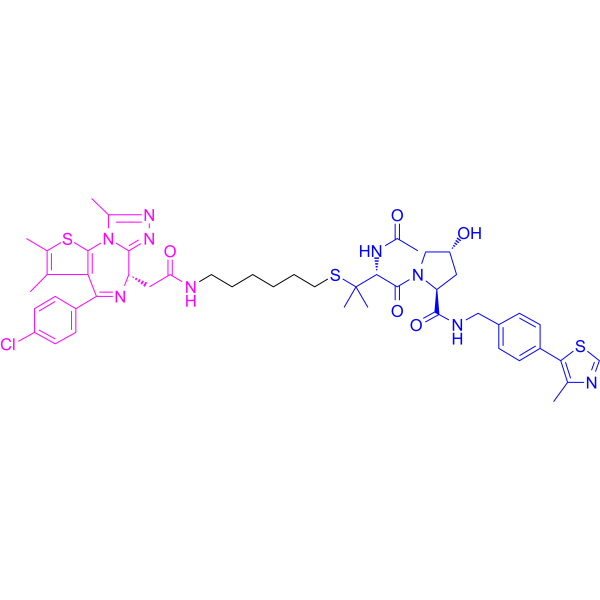 0 ImagesBRD4 degrader AT1 is a selective PROTAC BRD4 degrader. BRD4 degrader AT1 induces depletion of Brd4 protein in cells. BRD4 degrader AT1 exhibits highly selective depletion of Brd4 over Brd2 and Brd3 in cells.
-
MI-3454
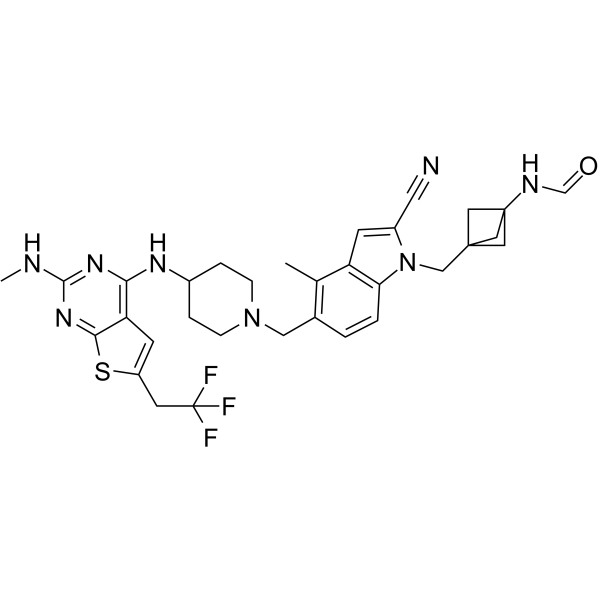 0 ImagesMI-3454 is an orally active, highly potent and selective menin-MLL1 interaction inhibitor with an IC50 of 0.51 nM. MI-3454 inhibits proliferation, induces differentiation and complete remission or regression of leukemia in mouse models of MLL1-rearranged or NPM1-mutated leukemia through downregulation of key genes involved in leukemogenesis.
-
Biotinylated-JQ1
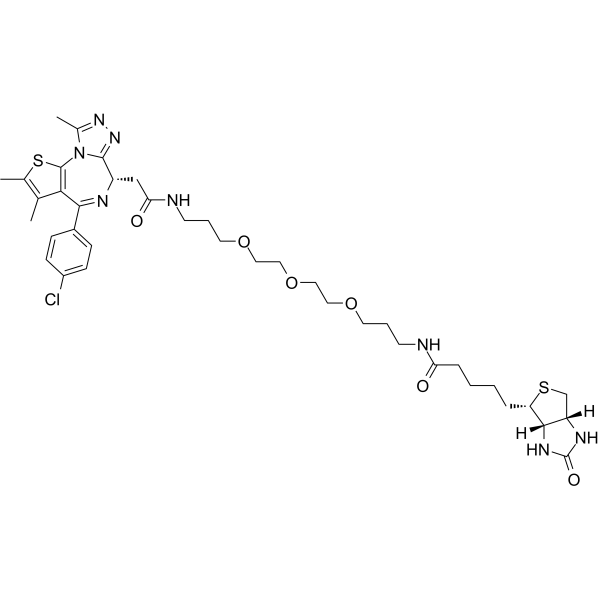 0 ImagesSynonyms: Biotin-JQ1Biotinylated-JQ1 (Biotin-JQ1) is a biotinylated derivative of JQ1 with high affinity for the bromodomain of BRD4. Biotinylated-JQ1 inhibits MM1.S multiple myeloma cells proliferation with the EC50 of 0.4 μM.




